| Product Type | Suggested Packaging Configuration | Packaging Instructions | Suggested Materials | Visual guide | Examples |
| General goods and apparel. | - Primary Packaging: Manufacturer's original packaging
- Second Packaging: Non-transparent polybag or Corrugated box depends
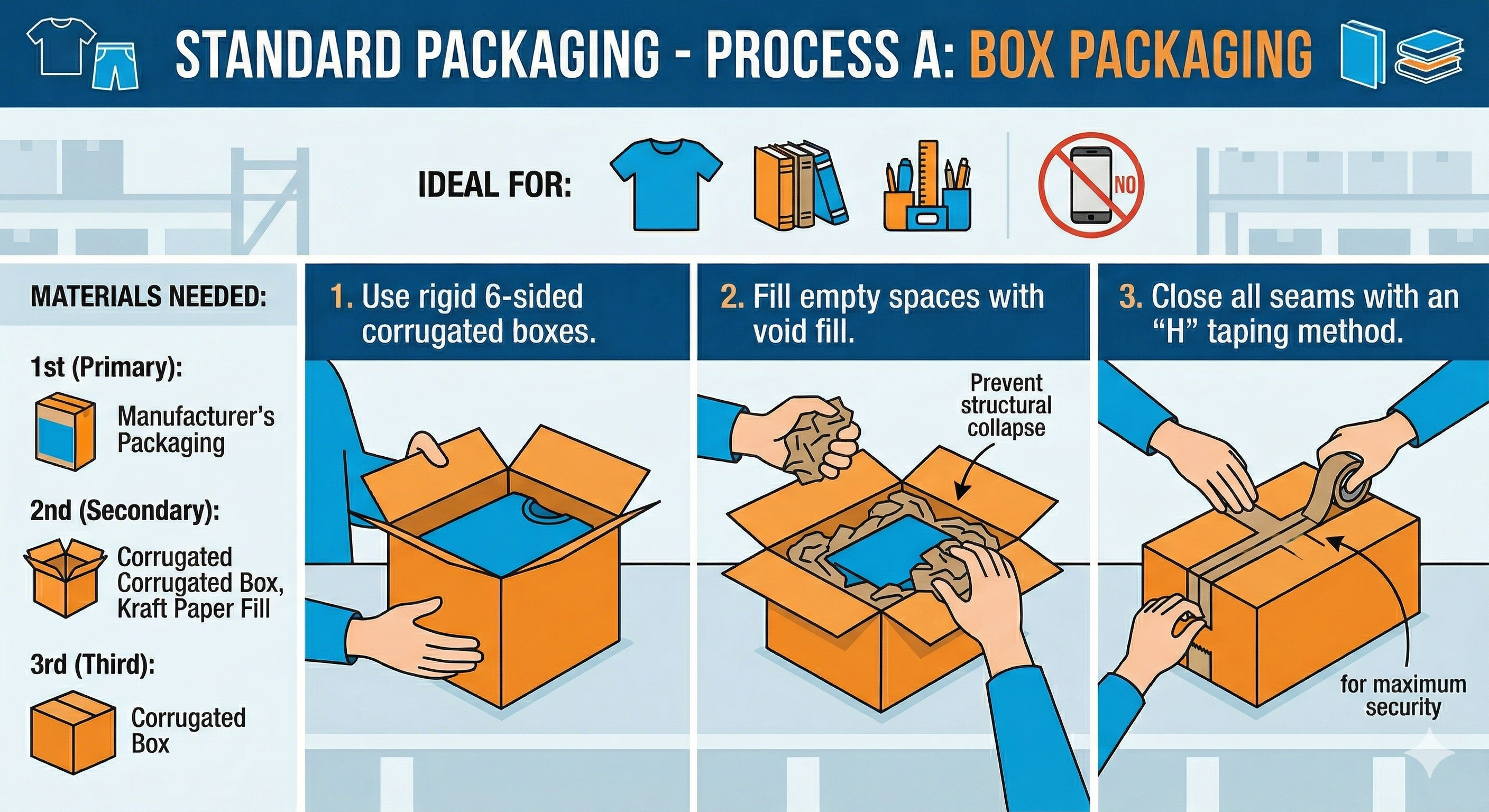
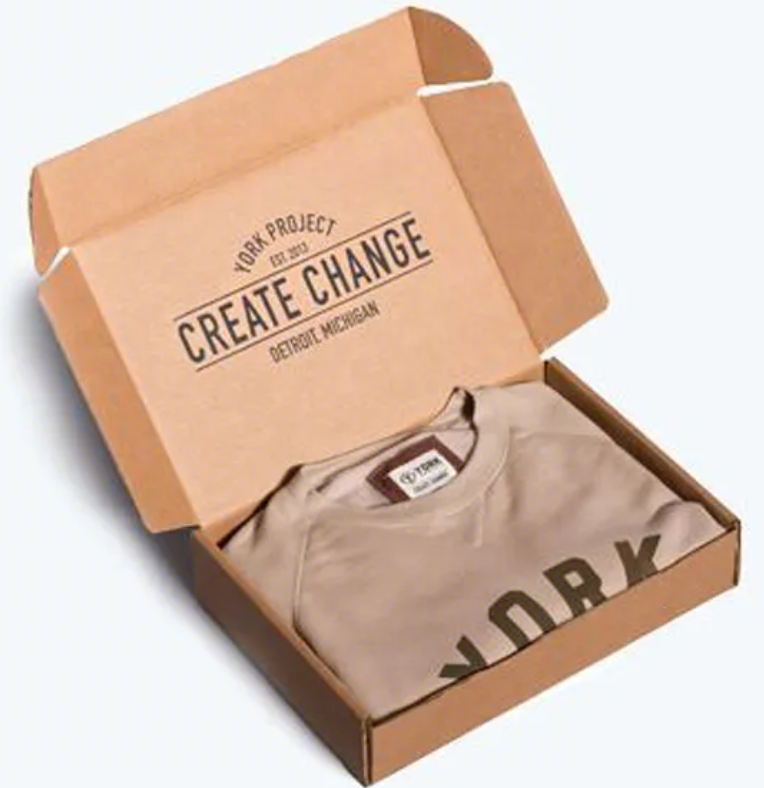
| Process A: Box Packaging- Use rigid 6-sided corrugated boxes
- Fill empty spaces with void fill to prevent structural collapse
- Close all seams with an "H" taping method for maximum security
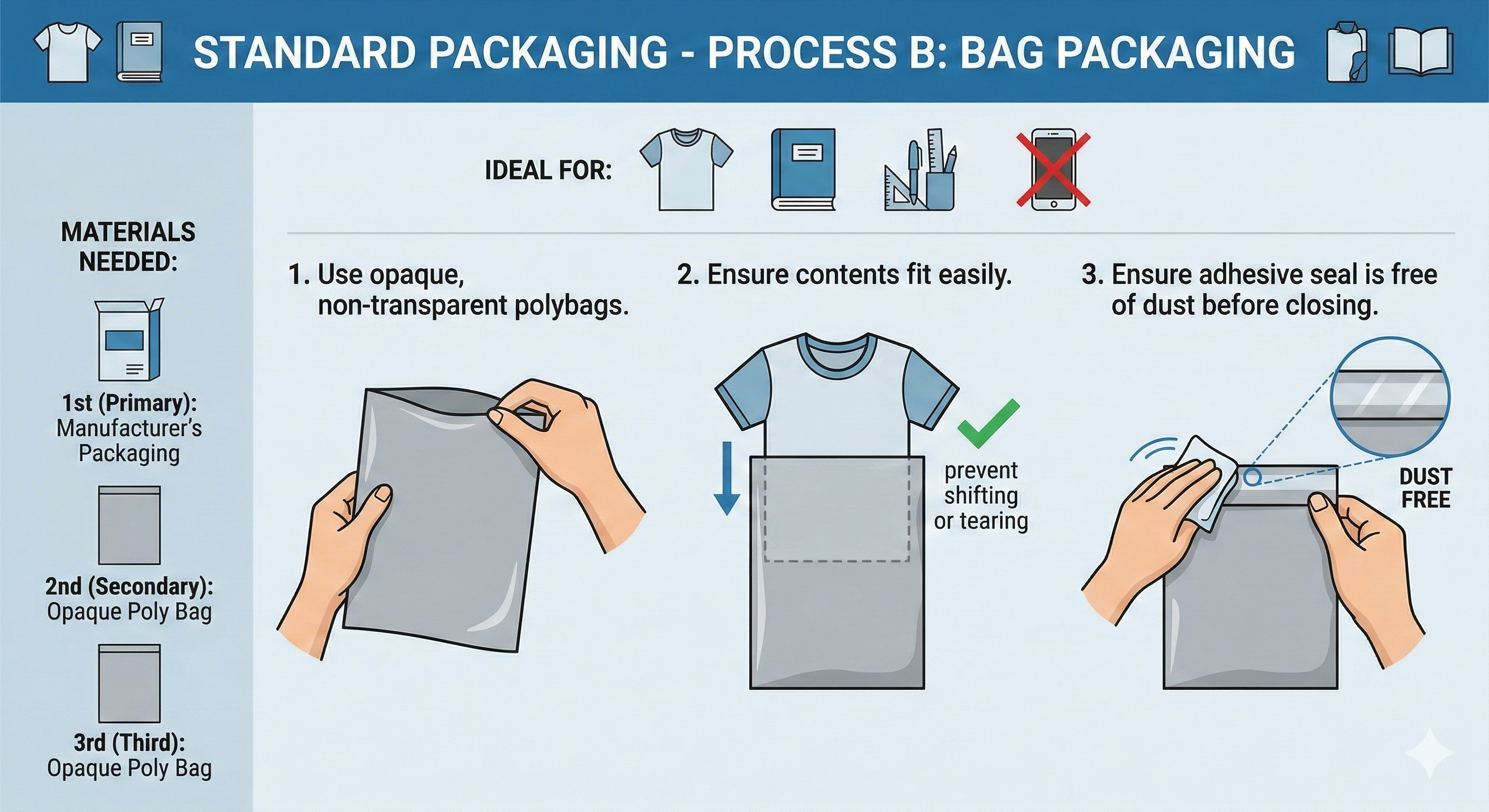
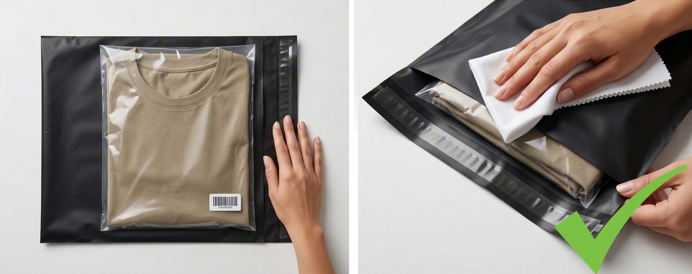
Process B: Bag Packaging- Use opaque, non-transparent polybags
- Ensure the contents fit easily to prevent the product from shifting or tearing the bag
Ensure the adhesive seal is free of dust before closing | - Corrugated Cardboard Boxes: Rigid 6-sided corrugated boxes according to the size of the Item
- Opaque Polyethylene Bags: Opaque, with tamper-evident security seals
- Kraft Paper Fill: for basic blocking and bracing
| Process A: Box PackagingProcess B: Bag Packaging | |
| Liquids goods | - Primary Packaging: Original hermetic container
- Secondary Packaging: High-Density Polyethylene Bags, Absorbent Pads, Internal Coating Boxes
- Third Packaging: Non-transparent polybag or Corrugated box
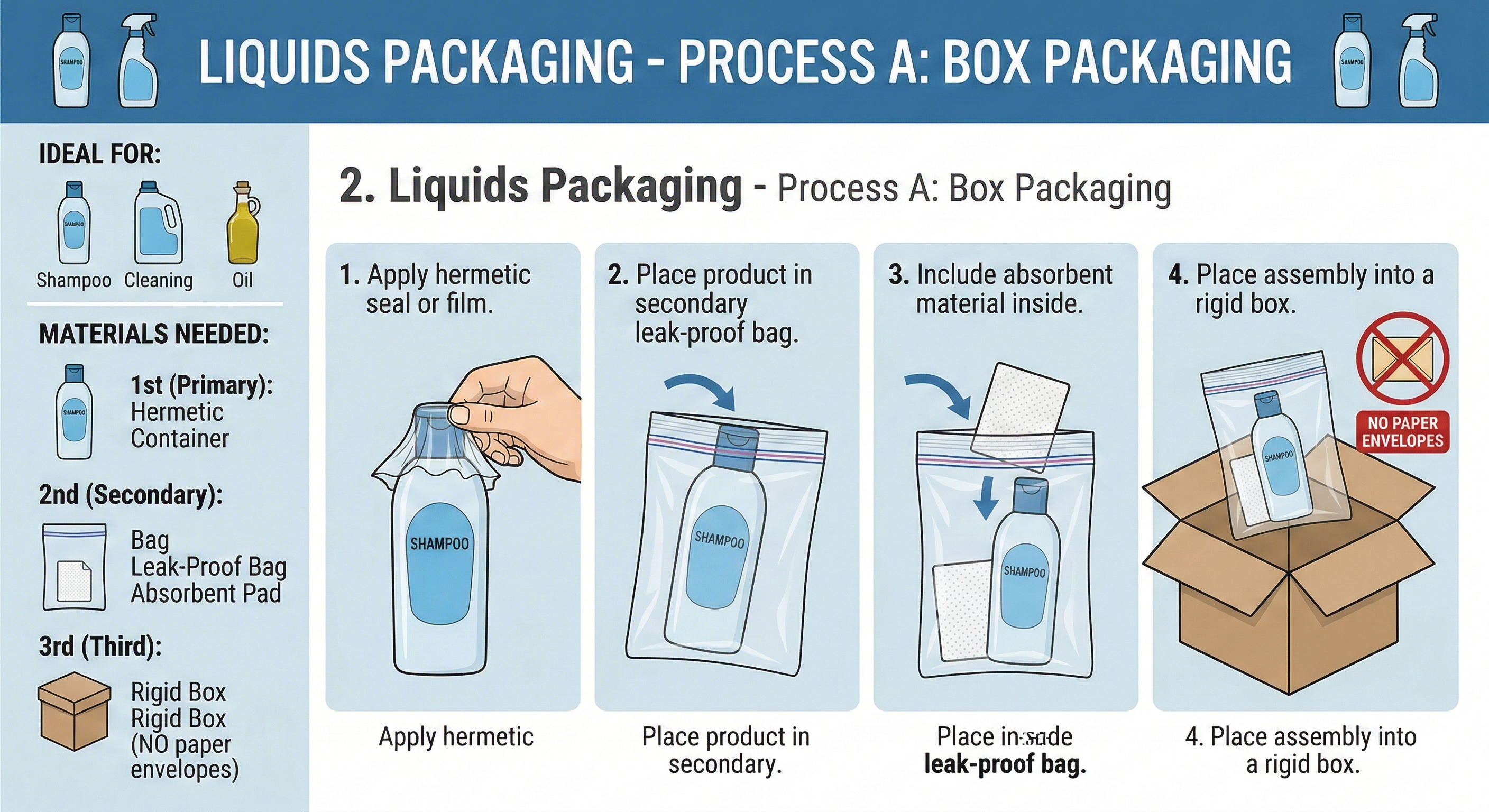
| Process A: Box Packaging- Apply a hermetic seal or film around the lid of the primary product
- Place the product inside a secondary leak-proof sealed bag
- Include absorbent material inside the secondary bag to contain potential spills
- Place the assembly into a rigid box; the use of paper envelopes is strictly forbidden
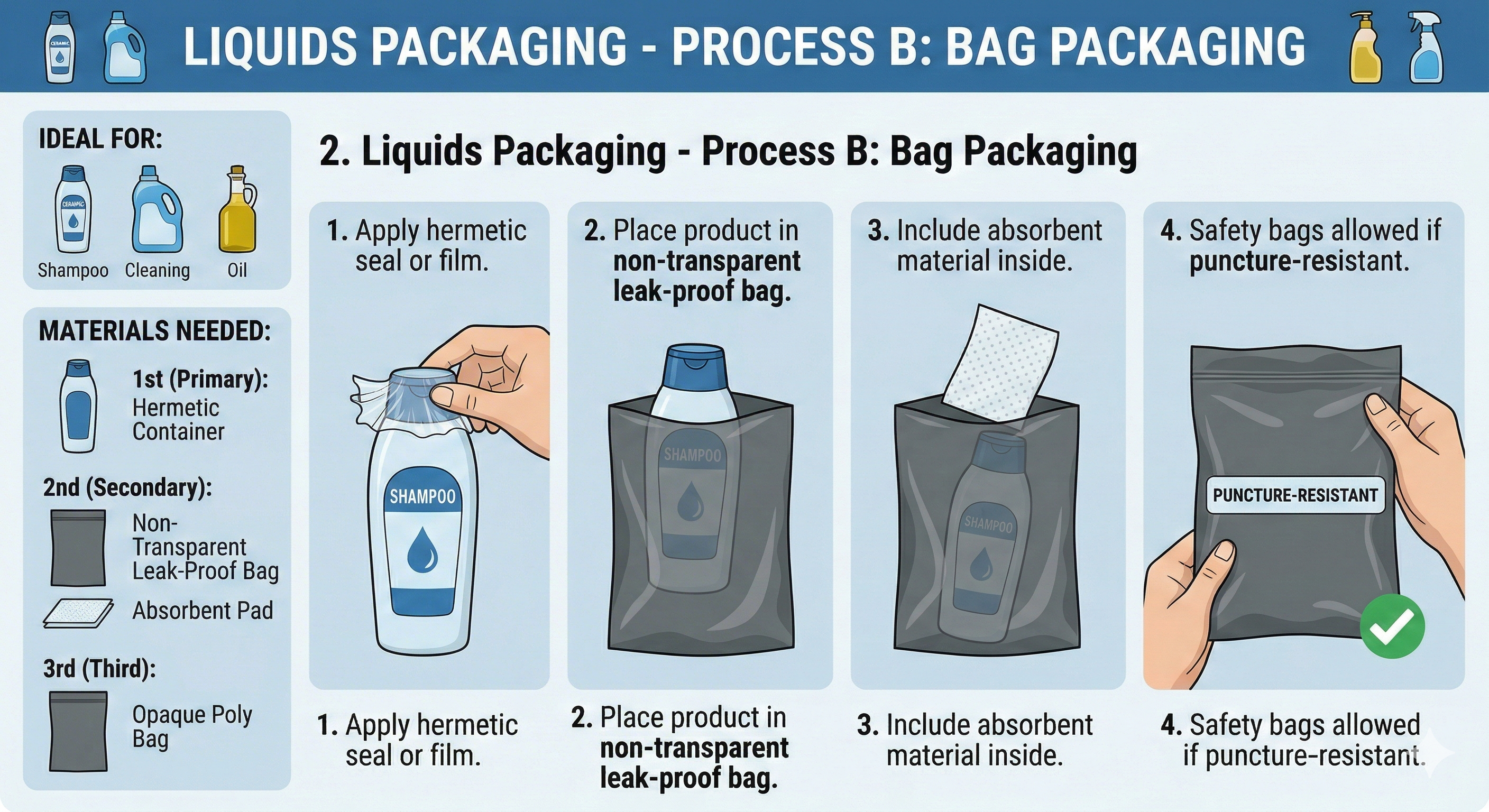
Process B: Bag Packaging- Apply a hermetic seal or film around the lid of the primary product
- Place the product inside a secondary non-transparent leak-proof sealed bag
- Include absorbent material inside the secondary bag to contain potential spills
- Safety bags(Thicker material, puncture-resistant to prevent leakage) are allowed if they are puncture-resistant
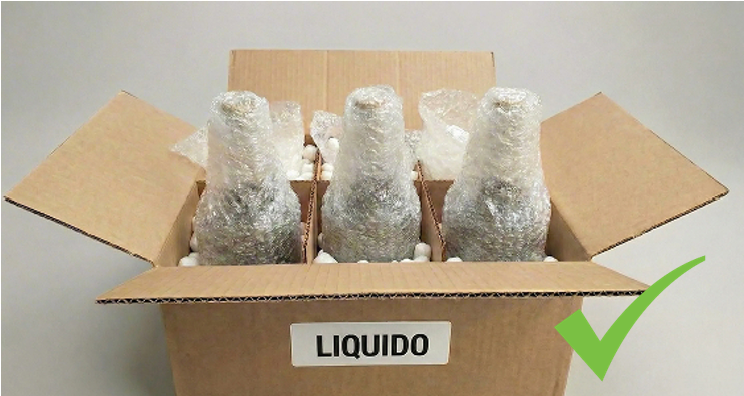
(If absorbent material is not available, bubble wrap can be used as an alternative. The bubble wrap should be sufficient in quantity to cushion the product and help contain minor leakage, reducing the risk of liquid spreading during transit) | - High-Density Polyethylene Bags: With "zipper"
- Absorbent Pads: Specific pads for industrial liquids or light chemicals
- Internal Coating Boxes: Cardboard resistant to humidity or with a special liner
| Process A: Box PackagingProcess B: Bag Packaging | |
| Fragile Items | - Primary Packaging: Manufacturer's original packaging
- Secondary Packaging: Large-Cell Bubble Wrap, Pressed Cardboard Corner Protectors, Polystyrene Peanuts or Foam
- Third Packaging: Non-transparent polybag or Corrugated box
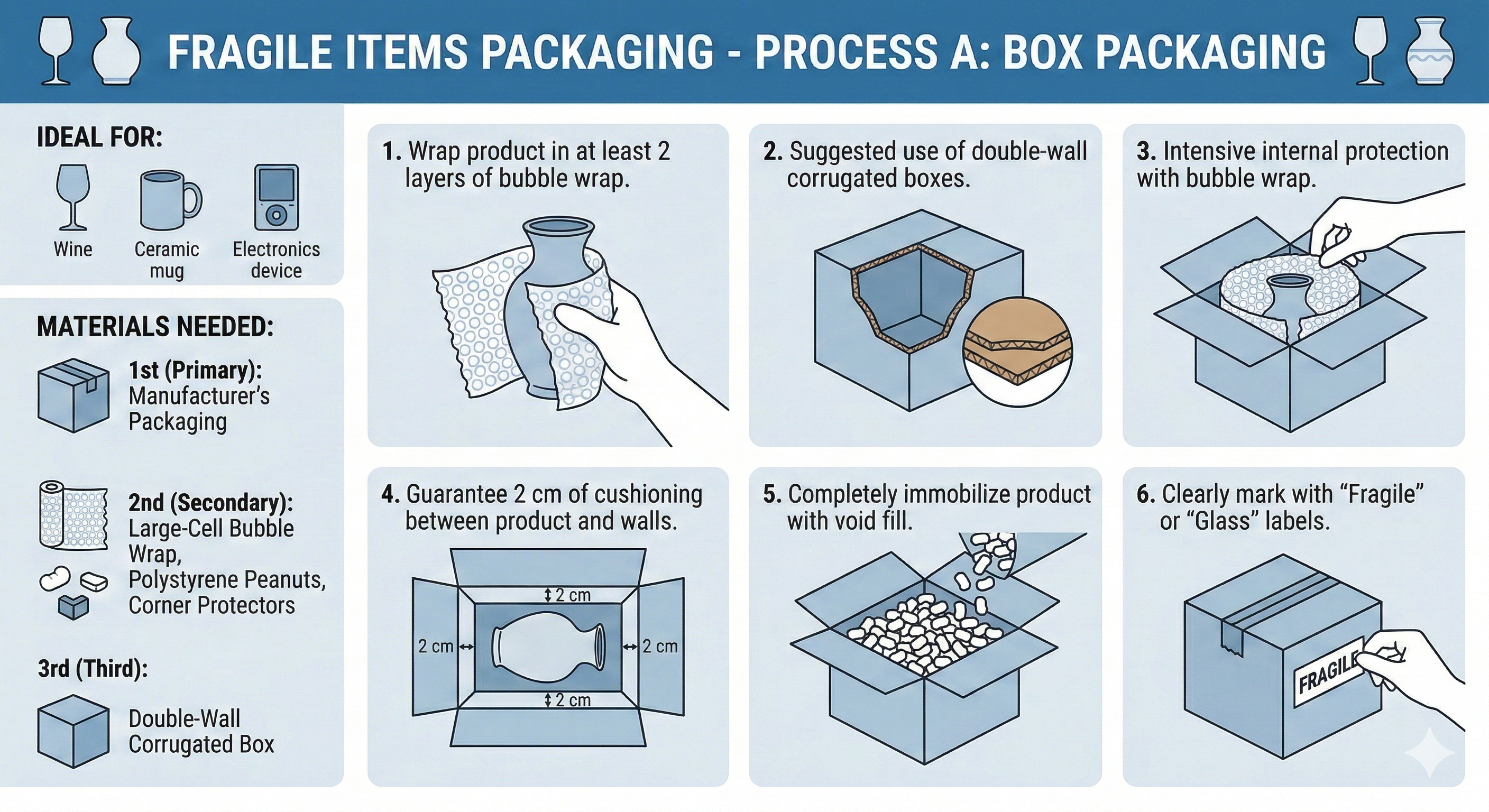
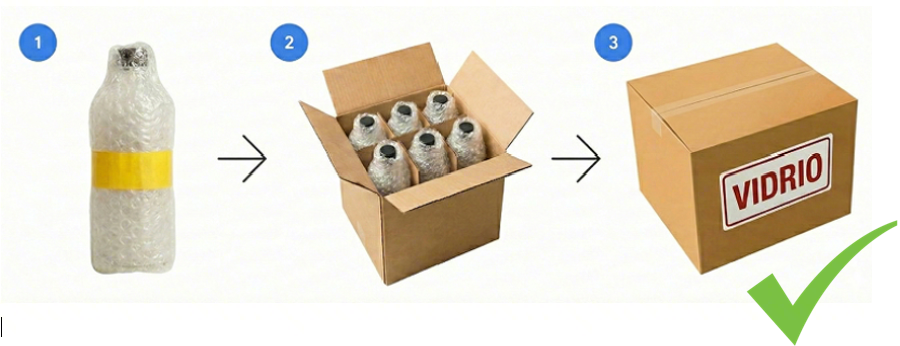
| Process A: Box Packaging- Wrap the product in at least 2 layers of bubble wrap
- Suggested to use double-wall corrugated boxes for maximum rigidity
- Requires intensive internal protection with bubble wrap before being placed in the box
- Guarantee 2 cm of cushioning between the product and the box walls
- Completely immobilize the product with void fill material
- Clearly mark the exterior with "Fragile" or "Glass" labels
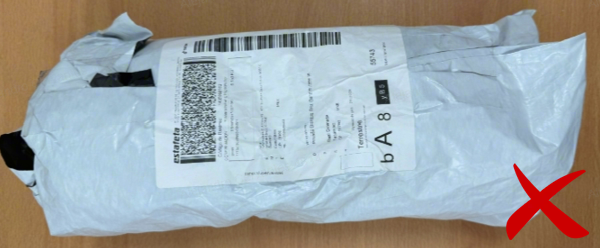
Process B: Bag Packaging- Only recommended for low-weight, low-volume fragile items
- Wrap the product in at least 5 layers of bubble wrap
- Requires intensive internal protection with bubble wrap before being placed in the non-transparent polybag
- Guarantee 5 cm of cushioning between the product and the non-transparent polybag
- Clearly mark the exterior with "Fragile" or "Glass" labels
- Note there is a significantly higher risk of damage if a box is not used
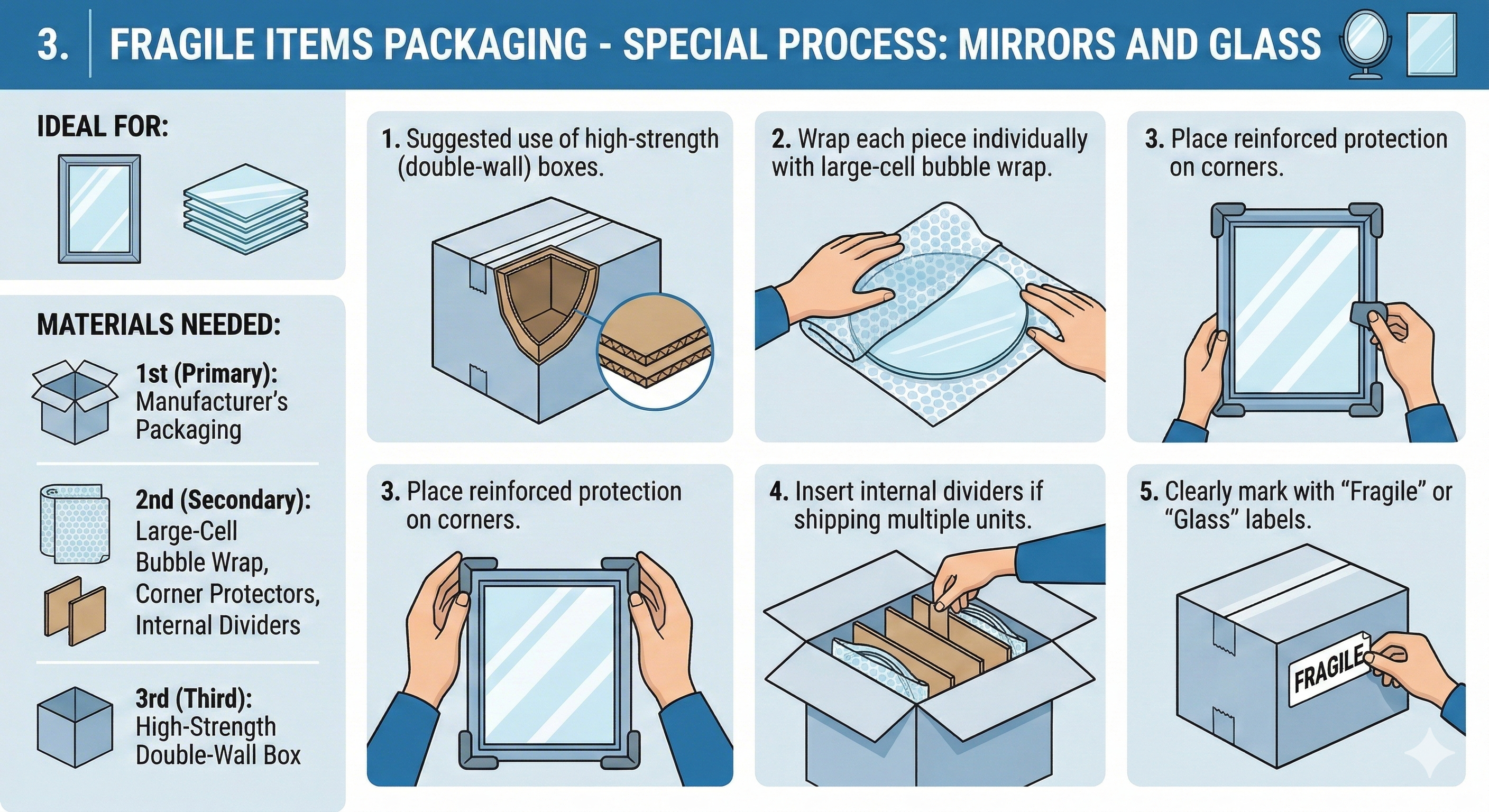
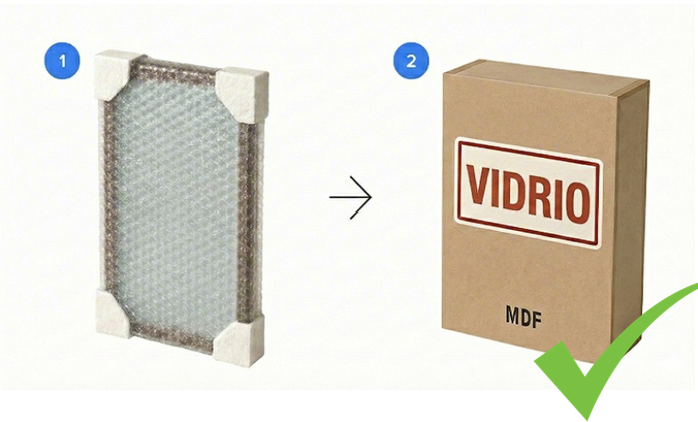
Special Process: Mirrors and Glass- Suggested to use of high-strength (double-wall) cardboard boxes
- Wrap each piece individually with large-cell bubble wrap
- Place reinforced protection on corners to prevent chipping
- Insert internal dividers if shipping multiple units to prevent direct contact
Clearly mark the exterior with "Fragile" or "Glass" labels | - Large-Cell Bubble Wrap: For critical shock absorption
- Pressed Cardboard Corner Protectors: Rigid profiles for edge protection on mirrors and frames
- Polystyrene Peanuts or Foam: Lightweight fill material for total immobilization
| Process A: Box PackagingProcess B: Bag PackagingSpecial Process: Mirrors and Glass | |
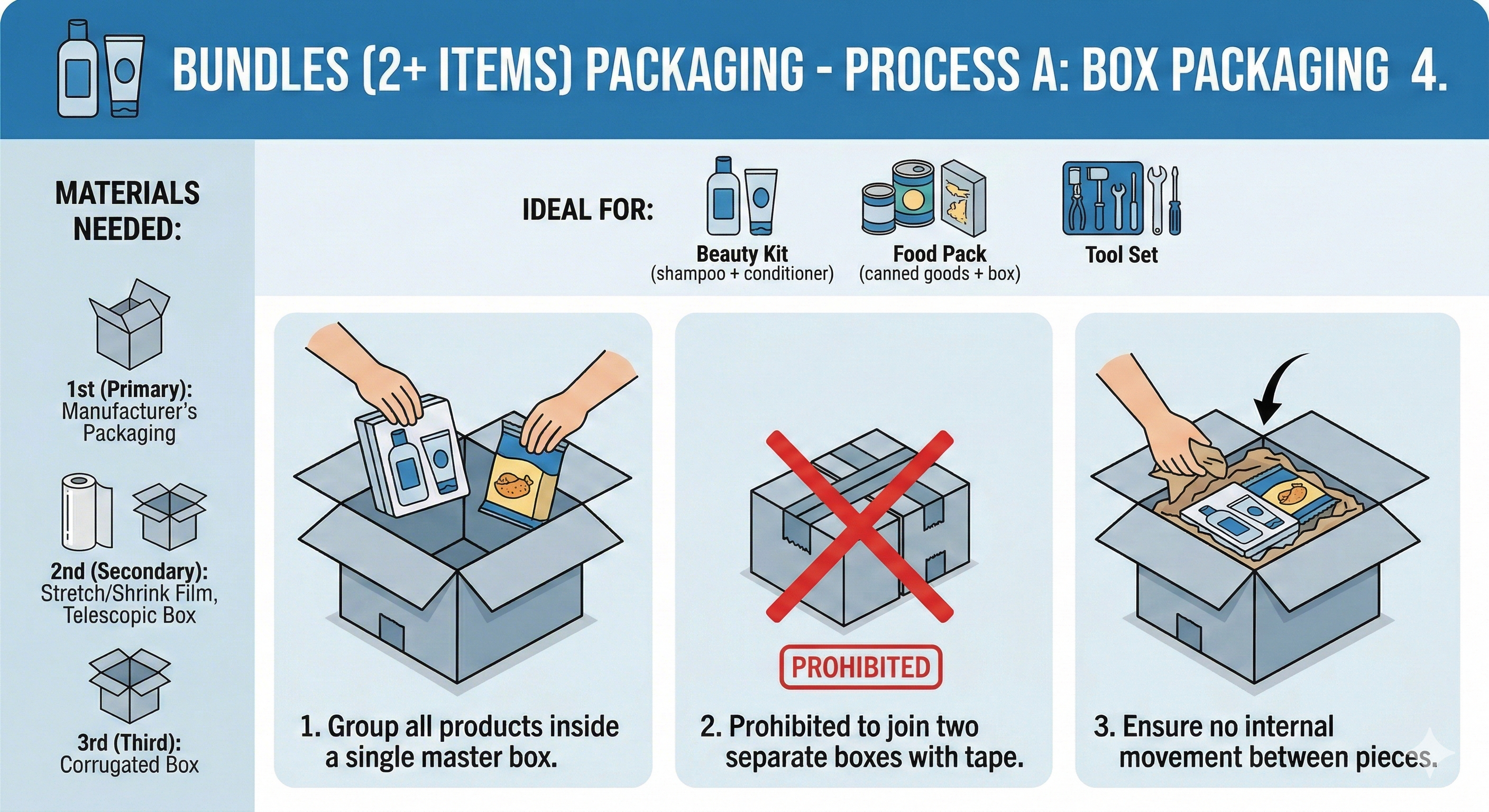
| Bundles | - Primary Packaging: Manufacturer's original packaging
- Secondary Packaging: Stretch/Shrink Film, Telescopic Boxes, Security Tape
- Third Packaging: Non-transparent polybag or Corrugated box
| Process A: Box Packaging- Group all products inside a single master box
- It is prohibited to join two separate boxes using only adhesive tape
- Ensure there is no internal movement between the pieces of the kit
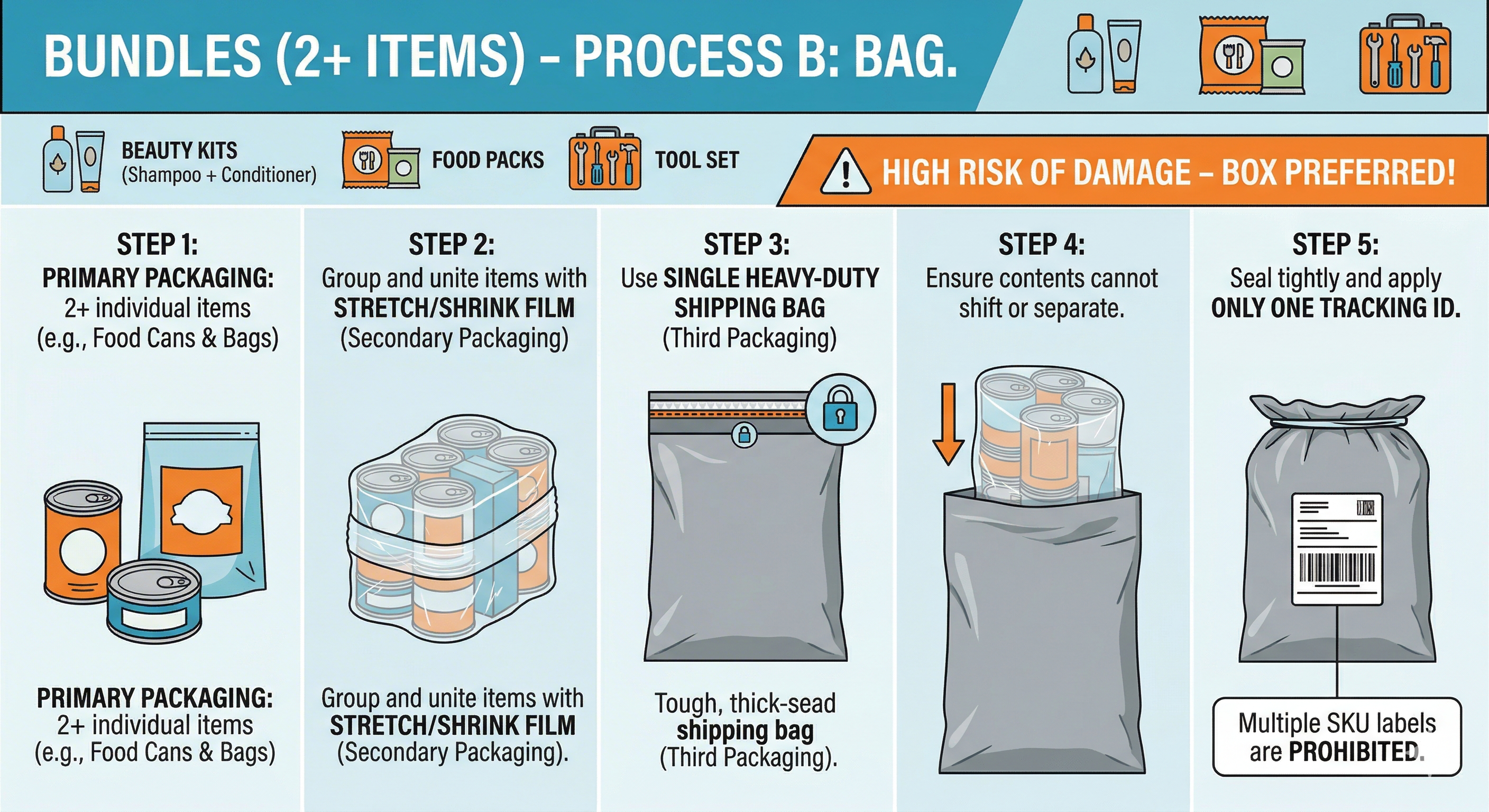
Process B: Bag Packaging- Place items into a single heavy-duty non-transparent polybag
- Bundles with separate labels for each SKU are not allowed; only one tracking ID per package
Use high-strength bags to prevent products from separating due to weight | - Stretch/Shrink Film: To keep products united before placing them in the box or bag
- Telescopic Boxes: Adjustable to the final size of the product set
- Security Tape: Specifically marked with "Sold as set" or "Do Not Separate"
| Process A: Box PackagingProcess B: Bag Packaging | |
| Dangerous Goods | - Primary Packaging: Manufacturer's original packaging
- Secondary Packaging: Corrugated Cardboard Boxes, Polyethylene Bags, Kraft Paper Fill
- Third Packaging: Non-transparent polybag or Corrugated box
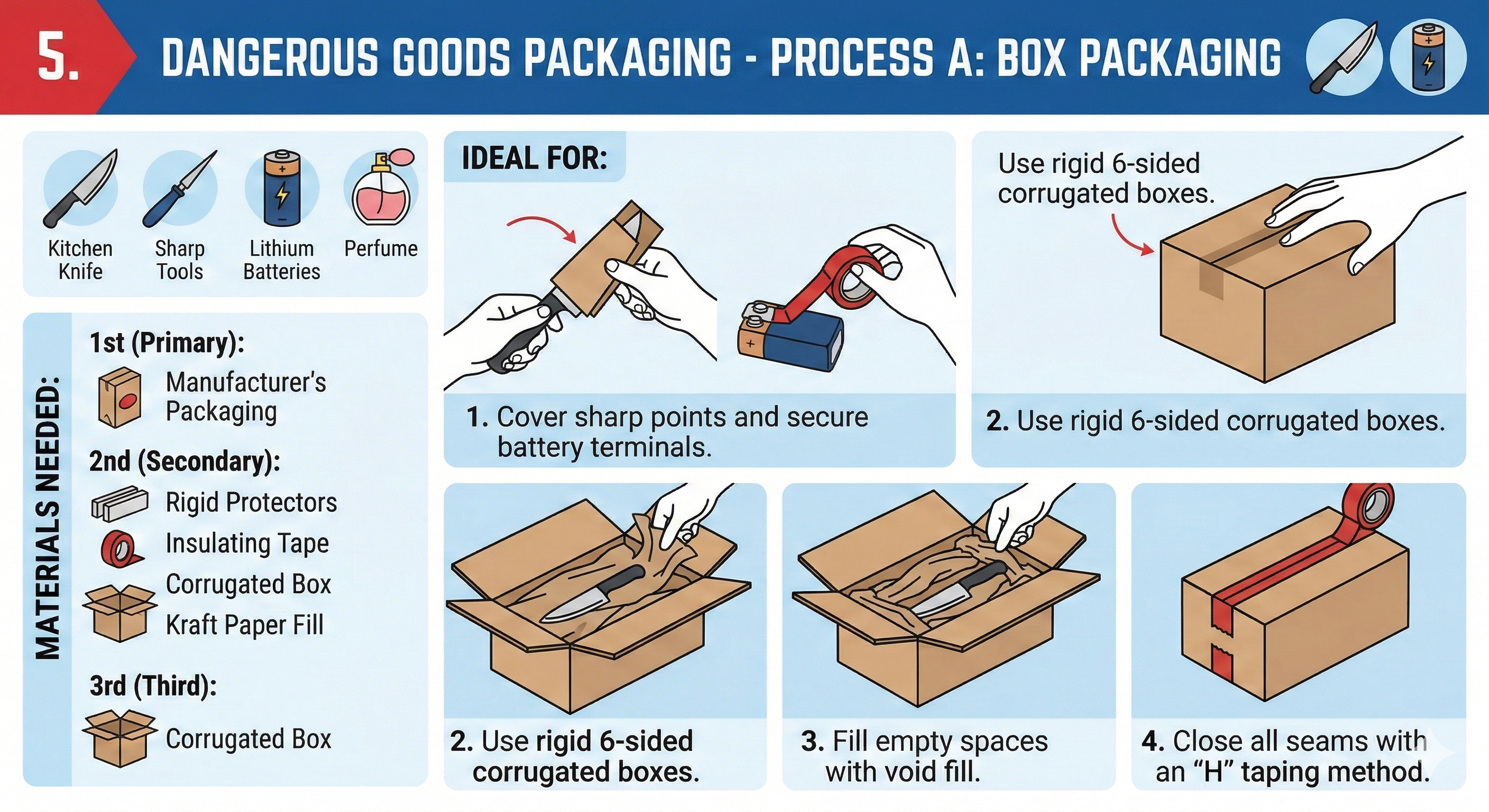
| Process A: Box Packaging- Cover all sharp points with rigid protectors or heavy cardboard, and secure battery terminals with insulating tape to prevent short circuits.
- Use rigid 6-sided corrugated boxes.
- Fill empty spaces with a void fill to prevent structural collapse and item movement
- Close all seams with an "H" taping method for maximum security
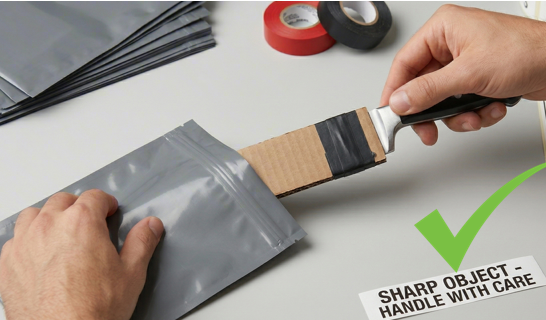
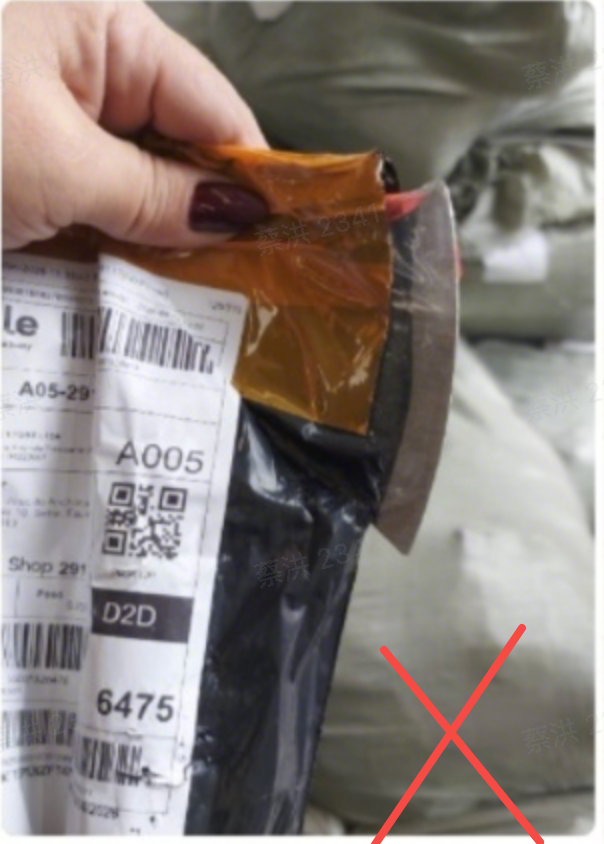
Process B: Bag Packaging- Cover all sharp points with rigid protectors or heavy cardboard, and secure battery terminals with insulating tape to prevent short circuits.
- Use opaque, non-transparent polybags
- Ensure the contents fit easily to prevent the product from shifting or tearing the bag
- Ensure the adhesive seal is free of dust or liquid residue before closing
- Ensure that "Hazardous Material" or "Flammable" labels are placed on a flat surface of the bag so they remain legible and scannable.
| - Corrugated Cardboard Boxes: Rigid 6-sided corrugated boxes according to the size of the item
- Polyethylene Bags: Opaque, with tamper-evident security seals
- Kraft Paper Fill: For basic blocking and bracing
| Process A: Box PackagingProcess B: Bag Packaging | |
| Big Items Packaging | - Primary Packaging: Manufacturer's original packaging
- Secondary Packaging: Corrugated Cardboard Boxes, Polyethylene Bags, Kraft Paper Fill
- Third Packaging: Non-transparent polybag or Corrugated box
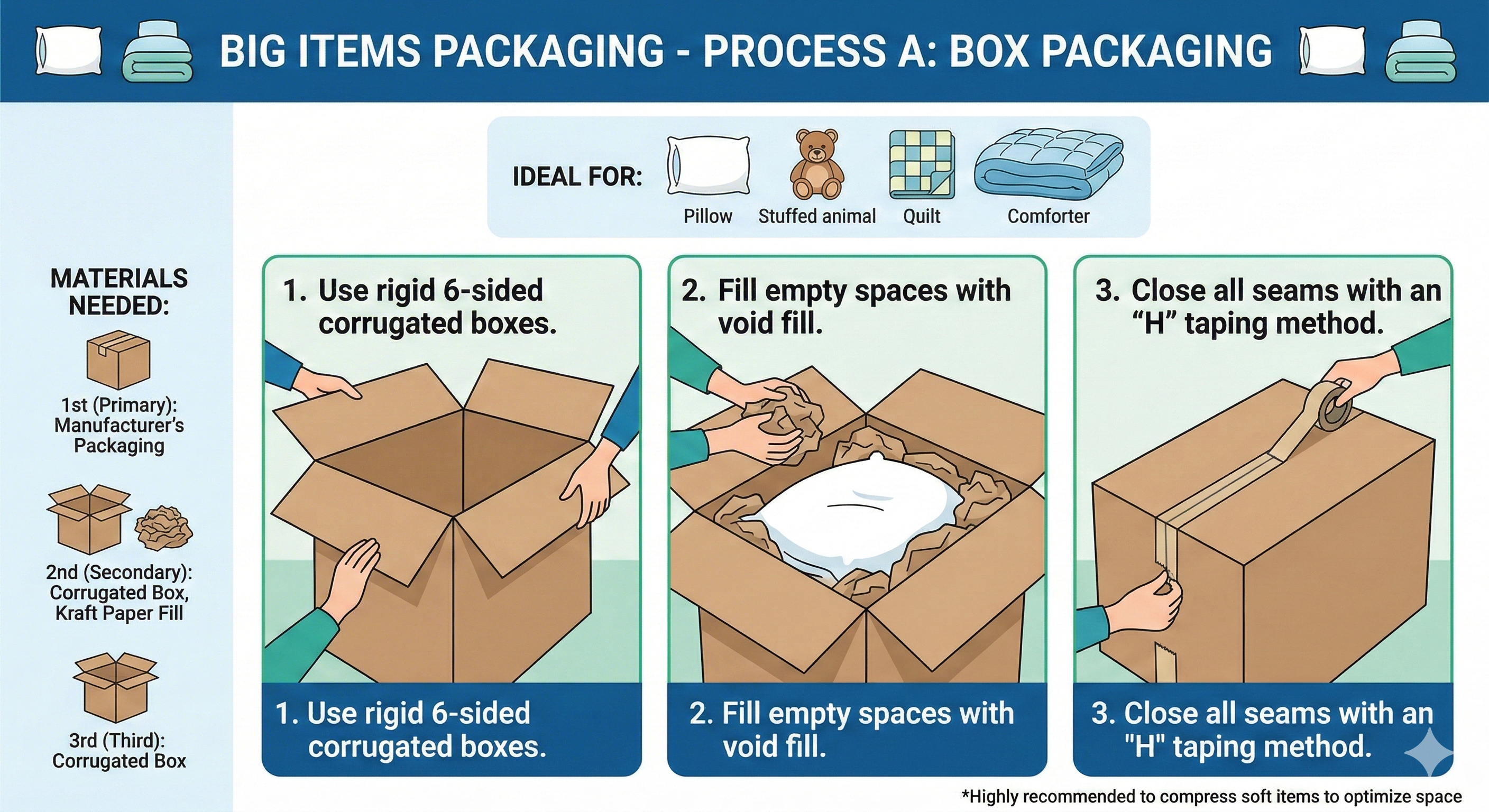
| Process A: Box Packaging- Use rigid 6-sided corrugated boxes
- Fill empty spaces with void fill to prevent structural collapse
- Close all seams with an "H" taping method for maximum security
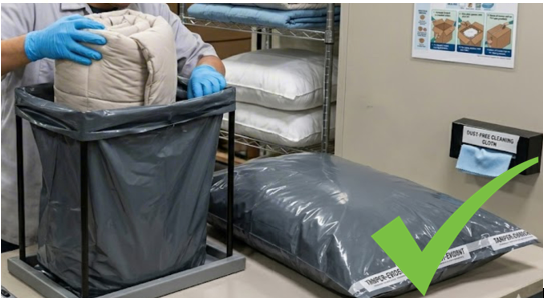
Process B: Bag Packaging- Use opaque, non-transparent polybags
- Ensure the contents fit easily to prevent the product from shifting or tearing the bag
- Ensure the adhesive seal is free of dust before closing
(Shipping Cost: Please note that this type of item is charged based on volumetric weight. The larger the package, the higher the shipping cost; it is strongly recommended to compress soft items to optimize space and reduce costs.) | - Corrugated Cardboard Boxes: Rigid 6-sided corrugated boxes according to the size of the item
- Polyethylene Bags: Opaque, with tamper-evident security seals
- Kraft Paper Fill: For basic blocking and bracing
| Process A: Box PackagingProcess B: Bag Packaging | |