【webinar】LATAM Shop Performance Score
This training material is provided for general information and reference purposes only. The purpose is to help sellers understand the platform's approach to SPS in the Latam market. This material is not legal or regulatory advice. Sellers are encouraged to consult their own legal advisors if they have questions about their specific products, content, or compliance obligations.
Core Content:
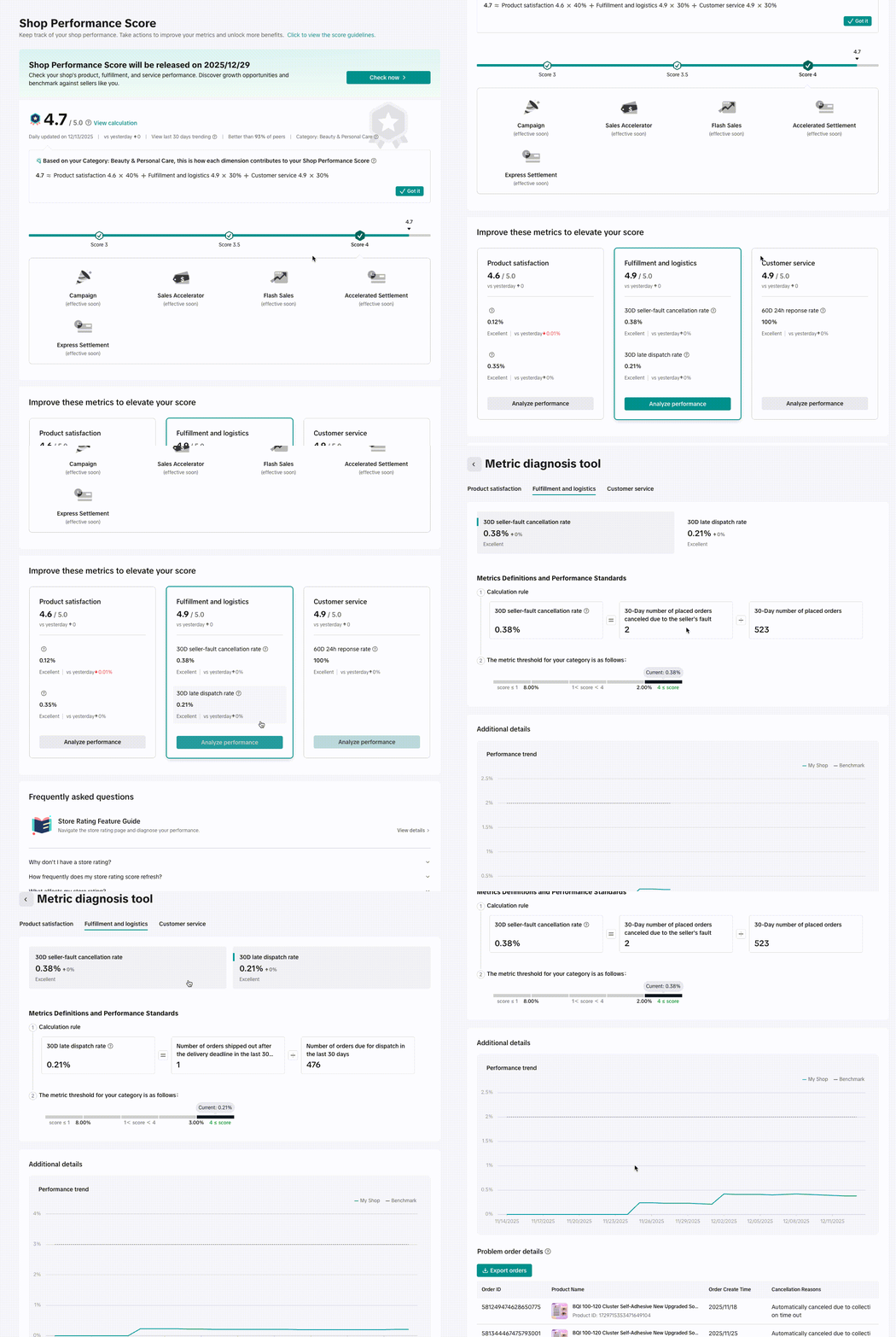
Merchants who complete at least 30 signed orders in the last 60 days will receive SPS points. SPS is updated daily.
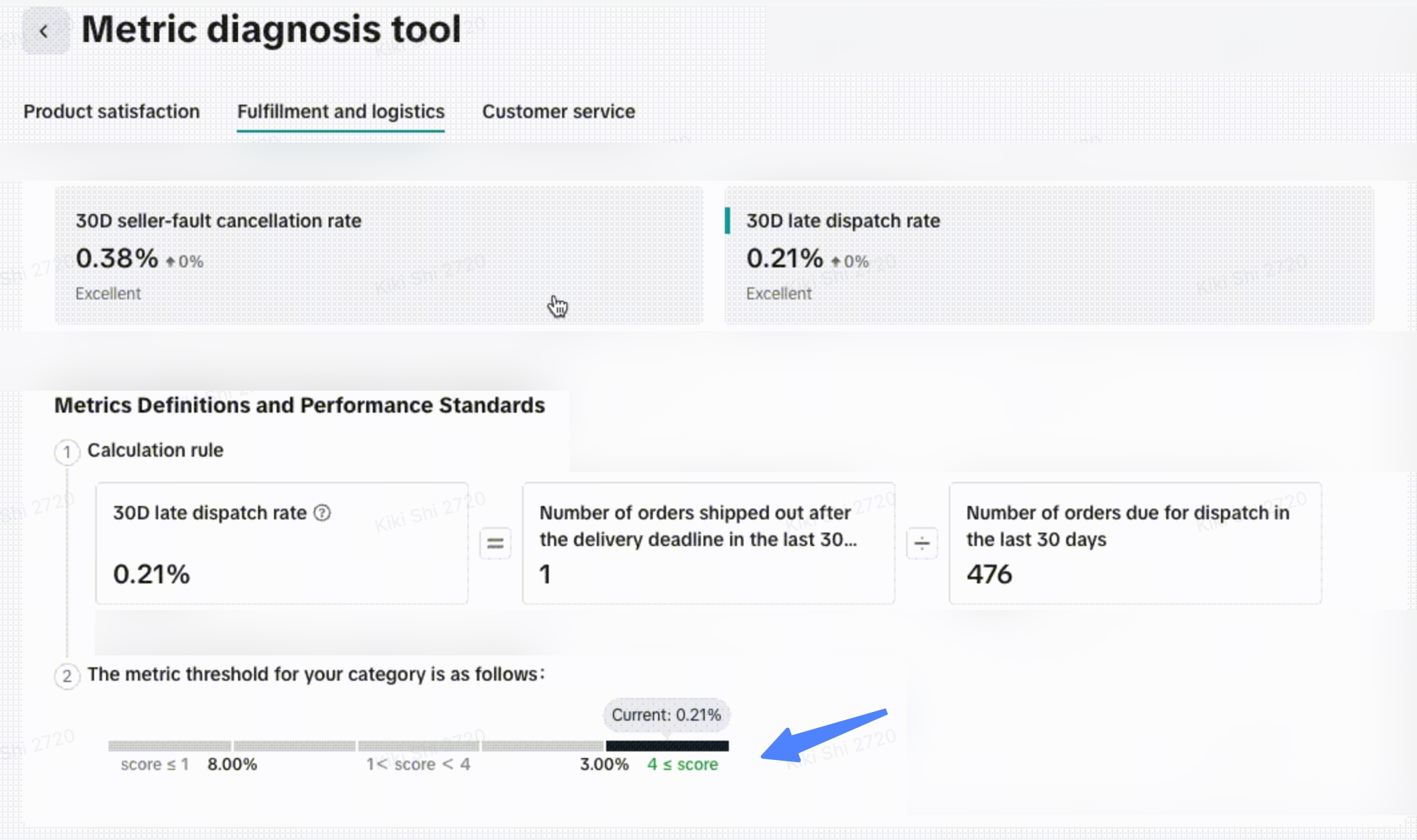
For example, in this case, the seller should maintain a Late Dispatch Rate (LDR) below 3% to achieve a score of 4 or higher. The current metric is 0.21%, and the blackened area is at the position of ≥4, indicating that LDR has already exceeded 4 points, so attention can be focus on improving other metrics.
Core Content:
- Definition of SPS, how to view your own SPS score
- What key metrics does SPS consist of: metrics and scoring methods
- How to Improve Your SPS Score
- High-Frequency Question Q&A
What is Shop Performance Score (SPS)
What is SPS | What is SPS
Shop Performance Score (SPS) is a scoring mechanism that measures a seller’s overall service experience. It evaluates performance across product quality, fulfillment, and customer service, and calculates a composite score ranging from 0 to 5.How Sellers Can View Their Scores
Why do we need SPS?
Type | Current Challenges | 当前问题 | How SPS Helps | Solutions through SPS |
| Merchant Perspective | 1. High cost of understanding: Sellers need to understand different metrics and thresholds separately in multiple domains.2. Insufficient incentives: When metrics are well-performed, the benefits are not obvious; when they are poorly performed, penalties are the main consequence.3. Lack of improvement guidance : Only the non-compliant results can be seen, lacking clear diagnosis and optimization paths. | 1. High cost of understanding: Sellers need to understand different metrics and thresholds separately in multiple fields.2. Insufficient incentives: When metrics are well-performed, the benefits are not obvious; when they are poorly performed, penalties are the main consequence.3. Lack of improvement guidance : Only the non-compliant results can be seen, lacking clear diagnosis and optimization paths. |
Benefits of Shop Performance Score ⭐
- Get personalized operational improvement recommendations | Receive recommendations to improve your shop's performance.
- View your performance ranking within the category| View your shop performance ranking with other sellers in the same category.
- Get more exposure opportunities and growth tools to improve sales performance(Continuously updated, please follow the relevant announcements regarding the application time) | Gain access to programs and tools on TikTok Shop Seller Center that can increase shop visibility and sales (Continuously updated, please follow the relevant announcements regarding the application time)
- Obtaining a shorter settlement: Merchants can only obtain a shorter payment cycle after their Merchant Experience Score meets certain conditions | MX - Seller Settlement Policy
- Promotional activities access : When the merchant experience points reach the activity registration threshold, they can sign up for the platform-specific marketing activities. | MX - Qualification for promotion (Expected to start in early April 2026)
- Quick Exit from the New Shop Probation: Newly onboarded merchants can exit the New Shop Probation faster after their Merchant Experience Score meets certain conditions, thereby lifting the restrictions on order volume and product quantity. | MX - Guidelines for New Shop Probation (Expected to start at the end of March 2026)
What key metrics determine the SPS score? | The key metrics of SPS
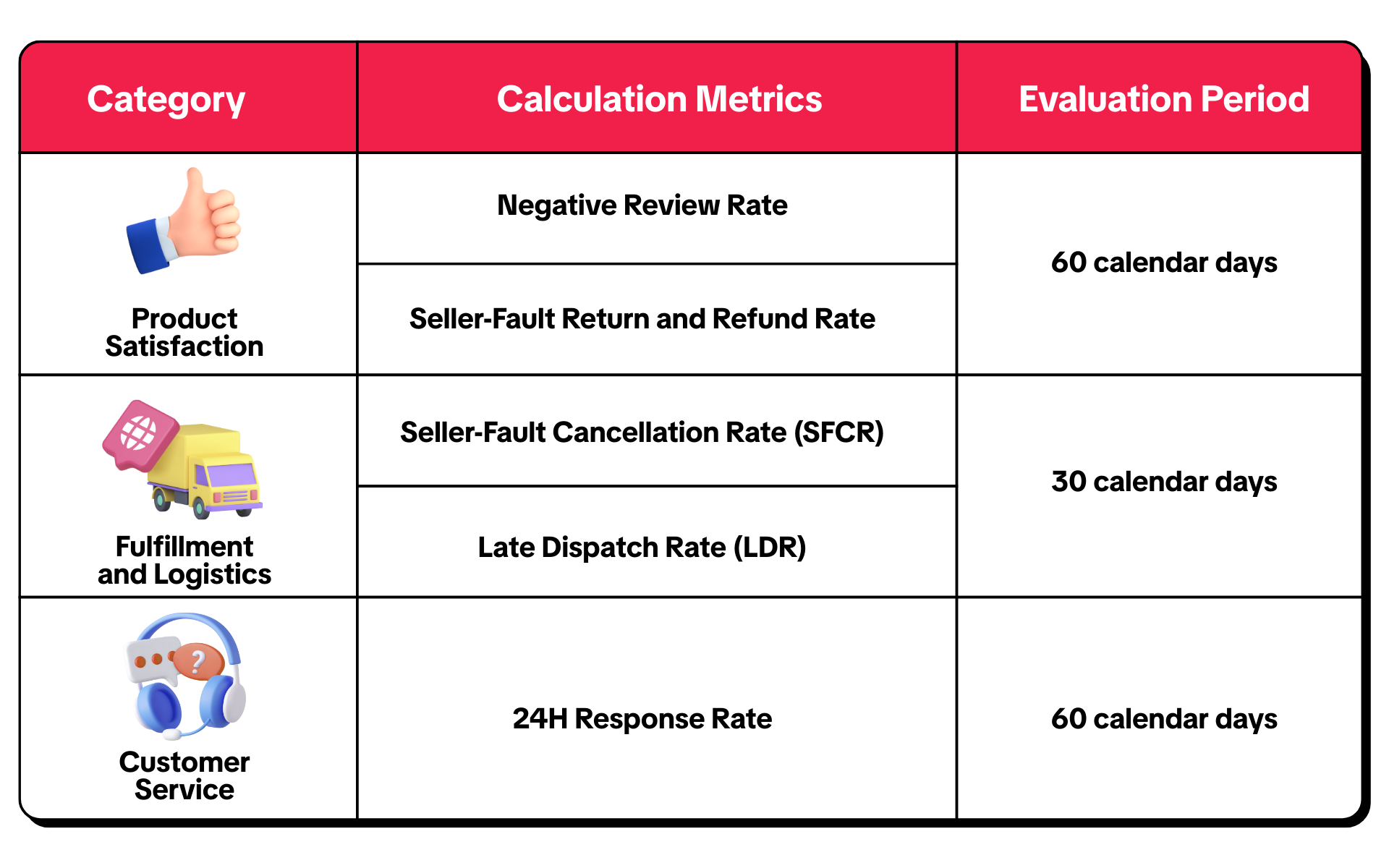
SPS includes product quality , fulfillment and service metrics in three aspects; in the time dimension, a 30-day window is usually selected, while for relatively sparse negative review and product removal metrics, a 60-day window is used to prevent excessive fluctuations in merchant scores.SPS consists of key metrics across three domains: Product Quality, Fulfillment, and Service.
Metrics | metric
Key Modules/Keys | Metric Name/Metrics | Metric Meaning/Remarks |
Product Quality | 60D Seller Fault Return Rate (SFRR) | Metric meaning: The proportion of orders among those paid and not cancelled in the past 60 days where the buyer first initiated a refund or return request due to the merchant's liability. |
60D Negative Review Rate (NRR) | Metric meaning: Among orders signed for in the past 60 days, the proportion of orders with a first evaluation of 1 star or 2 stars by the buyer (recalculation is not updated for revised evaluations) | |
Fulfillment | 30D Late Dispatch Rate (LDR) | Metric definition: (Orders with delayed shipment beyond SLA + Orders not yet shipped beyond SLA) ÷ (Total orders due in the period) from paid orders in the past 30 daysMetric meaning: (Orders with delayed shipment exceeding SLA + Orders still not shipped exceeding SLA) ÷ (Total orders due within the period) among payment orders in the past 30 days*注:SLA = Service Level Agreement ;BR - SLA - two (2) business days ;MX - SLA - three (3) business days |
30D Seller Fault Cancellation Rate (SFCR) | Metric meaning: The proportion of orders cancelled (both voluntarily cancelled and cancelled by others are counted) due to merchant liability (out of stock/delayed shipment) among payment orders in the past 30 days | |
Service | 60D 24H Reply Rate | Metric Meaning: Data on the number of times a seller responded to a buyer's first message within 24 hours within the past 60 days (including sessions that ended with FAQ and robot responses) |
Scoring Method | Calculation Logic ⭐
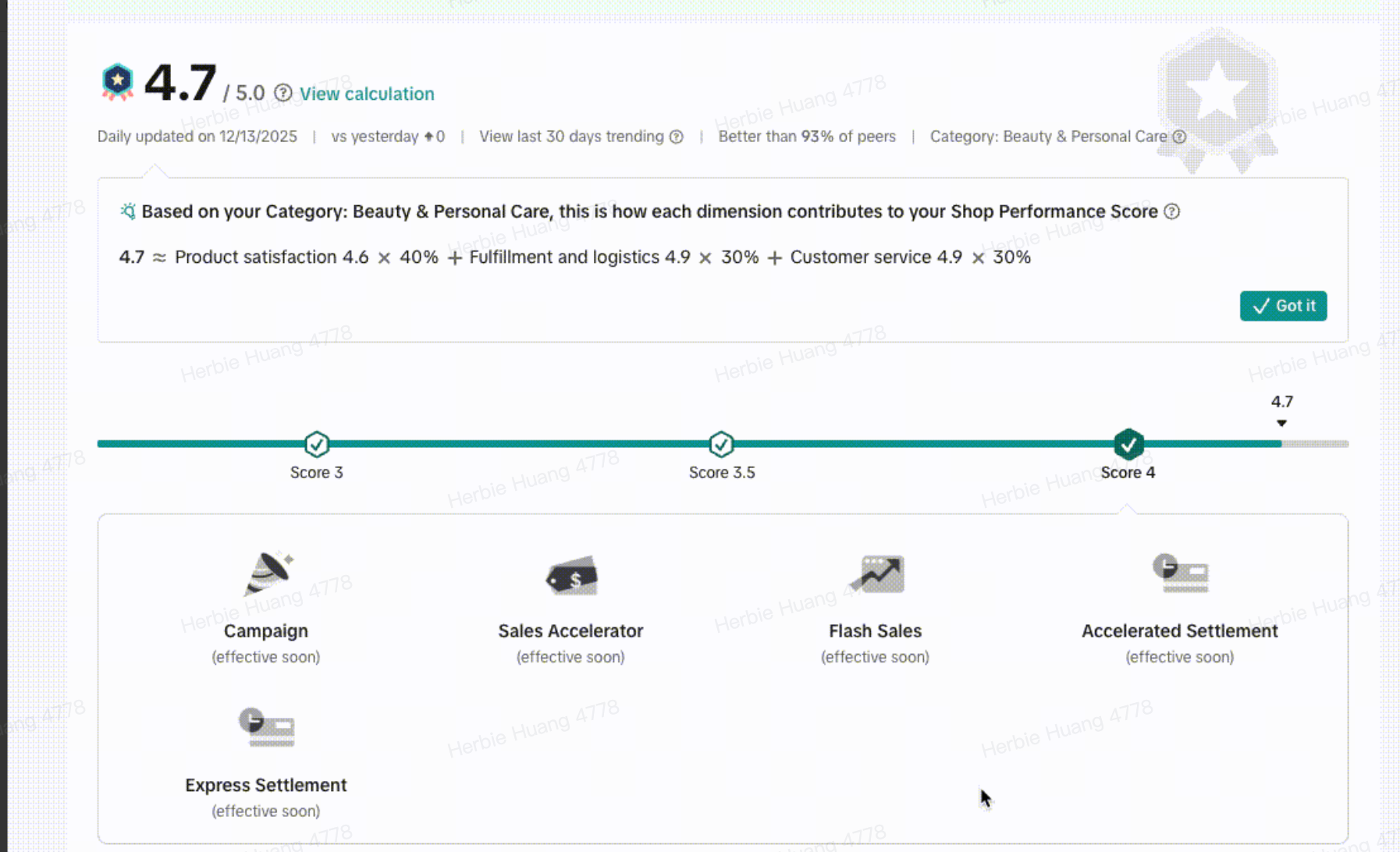
Generally speaking, the calculation of SPS involves dividing merchants into different tracks based on their primary business categories, ranking merchants' performance within each category, and then aggregating and calculating scores based on their ranking positions.In general, the calculation of SPS involves dividing merchants into different tracks based on their primary business categories, ranking merchants' performance within each category, and then aggregating and calculating scores based on their ranking positions.Calculation | Description | Seller Display |
|
| The weights are externally displayed at the module level, showing the currently used weight configuration (which only varies by country). 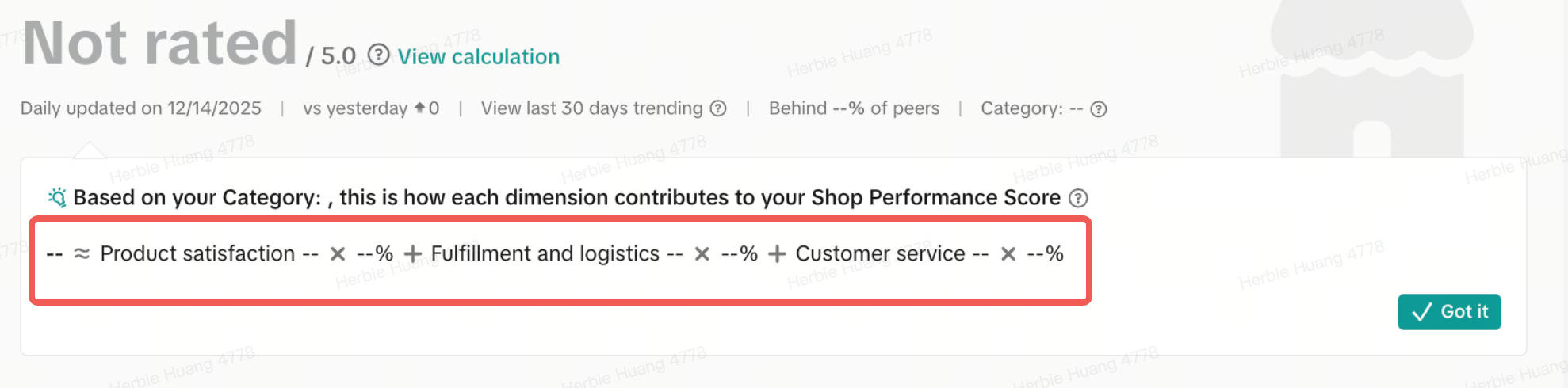 |
|
| Module scores are externally displayed
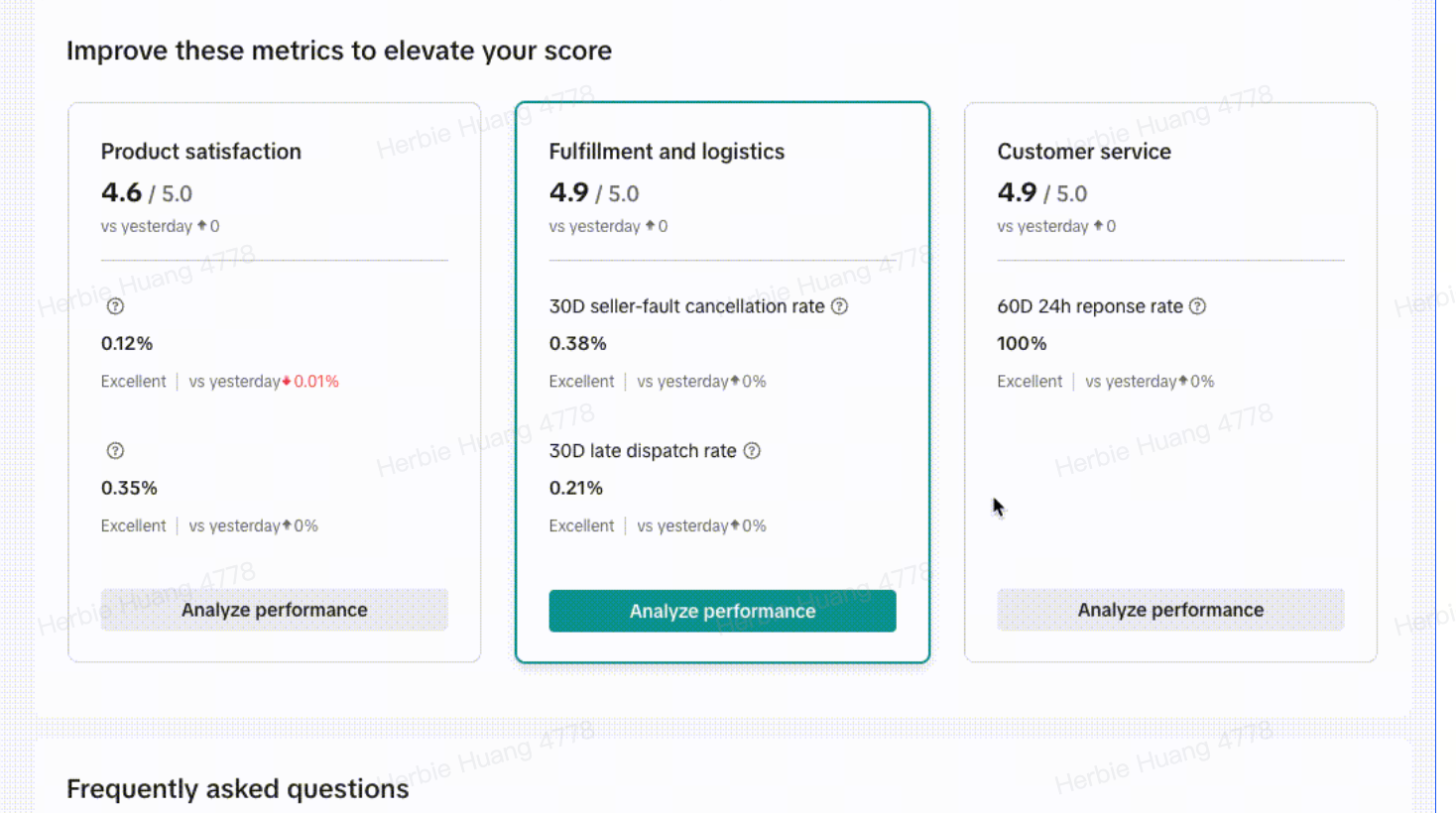 |
|
|  |
How to improve your SPS | How to improve your SPS?⭐
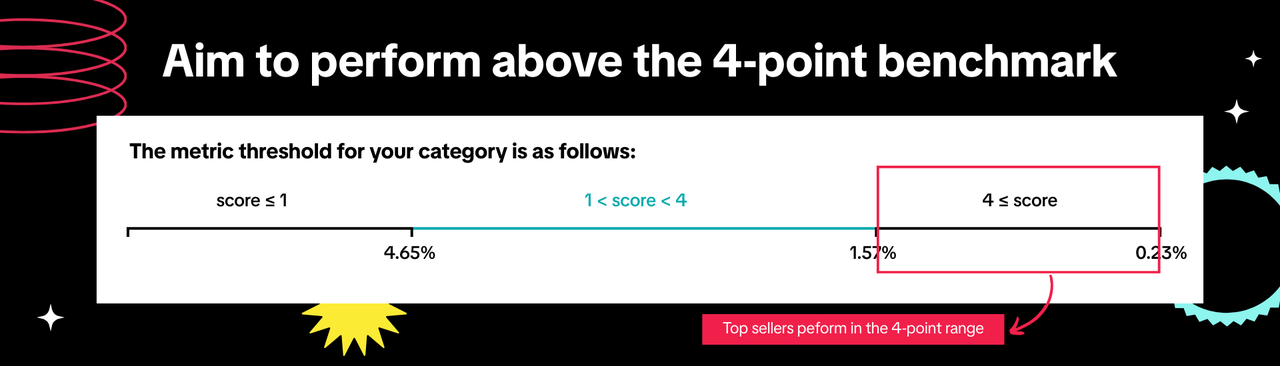
Improving your Shop Performance Score (SPS) starts with comparing your metrics against category benchmarks to understand how you perform relative to other sellers. Focus first on the metrics where your performance lags the most compared to other sellers, as improving these areas will have the greatest impact on your overall score. Then take targeted corrective actions—such as improving product quality, dispatching orders on time, and responding to buyers within 24 hours—to address the underlying issues. As a reference, top-performing sellers typically maintain an SPS above 4 points, reflecting a consistently strong customer experience.
Product Quality | How to improve damage | MX Version: The Customer Experience Guide for TikTok Shop Sellers |
Fulfillment | Understanding LDR | MX Version: Understanding and Managing Your Late Dispatch Rate (LDR) |
Service | Convenient Tools; Reply Narrative Suggestions⭐ |
FAQ
- Do all sellers have SPS scores? How often are SPS scores updated?| Do all sellers have SPS and how often is it updated?⭐
Merchants who complete at least 30 signed orders in the last 60 days will receive SPS points. SPS is updated daily.
- What are the targets for each metric? ⭐
For example, in this case, the seller should maintain a Late Dispatch Rate (LDR) below 3% to achieve a score of 4 or higher. The current metric is 0.21%, and the blackened area is at the position of ≥4, indicating that LDR has already exceeded 4 points, so attention can be focus on improving other metrics.
- Why can't I get 5 points even with a 0% Negative Review Rate? | Why can't I get 5 points even with a 0% Negative Review Rate?
- What's the relationship between SPS and AHR?